Showing posts with label Vendor Qualcomm. Show all posts

Wednesday, 8 January 2020

Ubicquia Touting Streetlight-powered Small Cells for Densification


We have seen a fair number of small cells on lamp posts and poles on this blog. Here is another one that I became aware of through Fierce Wireless. The following from the article:

The startup Ubicquia is touting its streetlight-powered small cell as a relatively easy way to deploy small cells for LTE densification and for 5G because streetlights are already permitted with municipalities. In addition, streetlights come with electricity, and they’re often in close proximity to fiber for backhaul.

Ian Aaron, CEO of Ubicquia, said there are 360 million streetlights around the world that have a common electric socket. This socket, known as the ANSI C136 (or NEMA) socket, “has been around for 55 years,” said Aaron. “It’s a common socket whether in Australia, Germany, USA, or Brazil. We build products that plug into that socket.”

One of Ubicquia’s products is its Ubimetro small cell, which can be mounted onto existing streetlights. Aaron claims the Ubimetro for streetlights is a better option than deploying small cells onto new cellular poles or onto cable strands.

Municipalities have already been complaining about the new 30-foot-or-higher poles that are sprouting up in their cities for the deployment of wireless small cells. One alternative to erecting new poles is to deploy small cells on existing cable strand. Some cable operators, such as Comcast and Charter, are looking into the possibilities of strand-mounted small cells. And Altice USA has already deployed some strand-mounted small cells in partnership with Sprint.

But Aaron says that not all cable aerial infrastructure is strand-mount. He said that strand-mount refers to a specific type of cable that is reinforced with an internal metal wire in order to support devices that could weigh up to 30 pounds. “Only a small amount of the cable infrastructure is strand,” said Aaron. “They use strand for areas where they have to hang the large splices. It’s not universal.”

Conversely, streetlights are pervasive, and they’re conveniently located near homes, businesses and cars. Aaron said, “The issue around small cell densification is not about the technology; it’s about getting permits and persistent power.”

“If you look at a small cell deployment today you would see a big box that converts the power on the pole from AC to DC; another box that does the metering so utilities can bill you; then you’ve got the radio; and then you’ve got multiple antennas,” said Aaron. “We’ve integrated all that into a device when plugged in you can’t see it from 25-35 feet.” 

The 4G Ubimetro device dimensions are about 8 inches by 15 inches by 3 inches. Ubicquia’s patented small cell device plugs into the streetlight, and clamps on to create a secure mounting. It has omni-directional antennas. Its 5G small cell is roughly the same size.

In terms of the radio antennas for the small cells, Ubicquia designed those itself using in-house talent from a team of C-suite executives that previously worked for Motorola.


Ubicquia doesn’t have any named customers, yet. The company is planning its first commercial product and first live small cell deployments for early 2020. It could potentially work with carriers that are densifying their networks. Aaron said utilities are also interested in participating in the rollout of small cells because it offers them a new revenue opportunity.


At MWC last year, they announced that they are working with Qualcomm. Quoting from their press release:

Ubicell can replace the photocell on more than 360 million streetlights worldwide, and delivers advanced light control, ANSI 12.20 power metering and tilt/vibration sensing. Integrating the Qualcomm® SDM845 processor from Qualcomm Technologies, Inc. brings high-performance edge processing and advanced smart city services that take advantage of the processor’s integrated hardware-accelerated neural network inferencing for edge AI, IoT security, media processing for video analytics, Bluetooth Low Energy (BLE) and enhanced WiFi range and performance.

They also recently announced partnership with Altiostar to accelerate Rural Broadband. From their press release:

Ubicquia®, the global leader in simply smart, simply connected network and IoT platforms for smart cities, and Altiostar, the pioneer in open virtualized radio access network (vRAN) technology, today announced an expansion of their partnership that will integrate Ubicquia’s new Ubimetro™ streetlight-powered small cell for CBRS spectrum with Altiostar’s Open vRAN software. The Open vRAN-integrated Ubimetro small cell is compatible with more than 50 million existing streetlights across the US allowing municipalities, utilities, wireless internet service providers (WISPs) and mobile network operators (MNOs) to expedite service deployments with the industry’s lowest total cost of ownership (TCO).

Today’s news follows last week’s announcement by Ubicquia that its Ubimetro suite of small cell products will also offer Citizens Broadband Radio Services (CBRS) capabilities. The Ubimetro portfolio of small cells are designed to support the network of the future, including 4G/5G, millimeter-wave spectrum, CBRS, and now Altiostar’s Open vRAN. Ubimetro provides a network-agnostic architecture with integrated MIMO antennas, a wide range of radio frequency front ends, and Ethernet, fiber and DOCSIS backhaul options.


More info on Ubicquia:

Related Blog Posts:

Thursday, 28 September 2017

Drones, More Drones & Droneway

I have written about Drones and Balloons in the past, mainly to BT/EE. Take for instance this presentation by Mansoor Hanif at TIP Summit and this one on Flying Small Cells. In addition I have also talked about Telefonica's Nano cell, which is a small cell on a drone; Verizon's 'flying cell-site' and AT&T's flying COW.


This week the US operator Sprint announced that they are trialing their Magic boxes on drones. Here is a video on that:


Back in August, IEEE Spectrum ran an article on how Flying Cell Towers Could Aid Search and Rescue. Base stations carried by drones would form an ad hoc network and connect first responders.

Picture Source: IEEE Spectrum

From the IEEE Spectrum article:

An aerial communications system supported by drones could be deployed much faster and operate with minimal interference. In 2013, we started to think about what such a drone-based communications system for public safety agencies might look like. We knew it would need a shared radio-frequency channel for first responders, drone-portable base stations, a power supply, and a digital database for exchanging information. We would also need controllers that would be easy enough for a licensed drone pilot to operate in a crisis.

Our first major challenge was to find a base station small enough for a drone to support. Drones under 25 kilograms—the limit now imposed by U.S. air-safety regulators—can carry a maximum payload of about 2 kg, so we would need a base station that weighed less, even with its battery.

Finally, my search led me to a startup named Virtual Network Communications. This company, based in Chantilly, Va., sells a product called a GreenCell that seemed suitable. It’s a scalable LTE base station, known as a picocell, which is typically used to extend the reach of an existing network but can also generate its own network. The base station contains an E-UTRAN Node B radio with two antennas and a credit-card-size component called a Micro Evolved Packet Core, which uses LTE technology to form an ad hoc network with nearby radios. Then, that local network connects to a nationwide cellular network.

With these components, our GreenCell can support communications for up to 128 users at a time from a distance of up to about 2 kilometers on any LTE frequency. Better yet, it measures just 12.5 by 12.5 centimeters and weighs only 2 kg with its battery, just light enough to be lifted by a drone.

Once we had found a suitable base station, we still needed to find a suitable drone. Ideally, it would be affordable and be capable of flying for 10 to 12 hours before needing a recharge. Unfortunately, no such drone exists today. Most commercial drones can stay aloft for fewer than 45 minutes.

After some research, I found a company named CyPhy Works, which has developed a drone powered through a 150-meter cord that extends up from a grid or generator. Technically, this drone could stay in the air for as long as it had access to a power supply on the ground. But in a disaster scenario, it would have to be tethered to a van loaded with a generator and fuel. That would limit it to serving the same road-accessible places to which mobile units already travel. Another drawback: The drone’s tether restricts its mobility once it’s in the air. We wanted to be able to reconfigure our network in an instant.

We briefly considered using balloons instead of drones, but we discovered through trial and error that balloons are difficult to reposition and hold in place, especially during high winds.

We decided instead to use the AR200 drone from AirRobot, a company based in Arnsberg, Germany. The AR200 has six rotors that allow it to hover more steadily than the usual four. And because the AirRobot drone is battery powered, it can zoom off to any location.

In summer, Qualcomm unveiled [PDF report] the results of a months-long drone trial program, which found LTE networks today already provide the aerial connectivity necessary to support commercial unmanned aerial vehicle deployments. But the tech giant noted some network optimizations will be necessary to take drone deployments to new heights. As per their blog post:

During the field trial, approximately 1,000 flights were performed to collect datasets that were post processed and analyzed. We also performed simulations to complement field trial results by allowing study of performance tradeoffs when the network is serving many mobile devices and LTE-connected drones simultaneously over a wide area. Simulations also enabled rapid testing of parameter and feature changes that are more difficult to study in a commercial network.

The field trial demonstrated that LTE networks can support safe drone operation in real-world environments. Our findings showed that existing commercial cellular networks can provide coverage to drones at low altitudes up to 400 feet AGL. Our test drones also showed seamless handovers between different base stations during flights. Below is a glimpse of these findings.


According to Mobile World Live,

The head of AT&T’s Unmanned Aerial Vehicles (UAV) business development team said the operator is working with regulatory authorities and standards organisations to “unlock” the potential of drones.

Speaking with Mobile World Live, Greg Belaus said many tests of drones on cellular networks so far have been conducted at a height of 400 feet. In the US, Belaus explained that airspace is governed by the Federal Aviation Administration’s (FAA) Part 107 rules. Belaus said “a lot of work” on drones right now is focused on what needs to be done to open that area for drone services.

There is an interesting AT&T Flying COW presentation on Youtube for anyone interested, here.

Finally, looks like "Droneway" may be becoming a reality soon. As one of the partners involved in the project, I may not be at a liberty to say much but this photo of the article below (click to expand) provides an idea ðŸ˜Š


*Full Disclosure: I work for Parallel Wireless as a Senior Director, Strategic Marketing. This blog is maintained in my personal capacity and expresses my own views, not the views of my employer or anyone else. Anyone who knows me well would know this.

Thursday, 10 November 2016

Multi-vendor LTE Small Cells SON

Before we proceed further, in case the reader is not aware of Self-Organizing Networks (SON), please refer to my old tutorial here.

BT has recently published a white paper on multi-vendor LTE SON based on tests using LTE small cells provided by Node-H and Qucell. From the news posted on Node-H website:

The white paper focuses on the important issue of interference management between small cells. The paper is the result of a joint effort by British Telecom's Research and Innovation group and the technical teams of Qucell and Node-H. It addresses some of the major challenges of LTE HetNets and expands on the work of the 2016 ETSI Plugfest, which was run under the auspices of the Small Cell Forum. The authors’ conclusion is that interoperability between different vendors' SON implementations is achievable and so operators can look forward to robust, seamless and tailored solutions from multiple vendors.
The white paper shows that it is possible to operate mobile networks in which the individual LTE cells execute different ICIC algorithms. These findings challenge preconceptions about SON that are common in the mobile industry and make the case towards larger multi-vendor deployments of LTE small cells and call for bolder efforts in multi-vendor SON testing.
The ICIC algorithms used during these tests have been developed independently and without exchange of technical details between two separate HeNB vendors. Despite this, it has been shown that both algorithms can gracefully co-exist in the same LTE network. ICIC standardization efforts within 3GPP, along with the Small Cell Forum's Plugfest activities, have been key to this success.

The whitepaper embedded as follows and is available to download from here:


Related posts:


Sunday, 20 September 2015

Summary of Small Cell Forum Champions day


Small Cell forum held its champions day in Rome this month. There were some interesting case studies and presentations (details below). I have embedded some presentations and provided links to others. Interested people, feel free to explore further.

The Small Cell Forum has identified six key work items where they will be focusing their energies. These are:
  • Small cells in Enterprise
  • License Exempt Spectrum
  • HetNet & SON
  • Virtualization of small cells
  • Multi operator support
  • The role of small cells in 5G, IOT & M2M
Spidercloud did a presentation on Enterprise small cells. They were also one of the sponsors for a study by analyst firm iGR that showed strong demand among Enterprises for Managed Services based on Small Cells.

Cisco shared a case study from a university campus deployment where existing WI-FI APs were ‘upgraded’ to add a small cell capability.


Quortus demonstrated the range of architectures possible with virtualized small cell core networks including the on site MEC server supporting small cells across an enterprise and mission critical small cells supporting public safety applications. See presentation below:


iBwave showed how deployment within the enterprise had improved, with a case study which reduced indoor small cell planning down to one site visit.

MVNO TalkTalk outlined their plans to add LTE small cells to their home routers enriching customer experience as well increasing traffic offload from the macro network. The residential 4G small cells use a dedicated 3.3MHz carrier frequency already compatible with existing 4G handsets to provide good coverage indoors and in the surrounding streets.

Nokia demonstrated the importance of 3D thinking when planning small cell HetNets in dense urban indoor and outdoor environments due to building and user topography.

Qualcomm described how their SON technology provides zero touch integration for both the small cells and the macros, optimizing handovers in both directions.


Huawei shared their vision for small cell evolution, incorporating emerging technologies which leverage license exempt spectrum. Their demonstration of LAA mobility with Vodafone notching up 600Mbps peak rates clearly showing the potential of a joined-up approach to spectrum.


Airspan trials with SoftBank demonstrated an early nFAPI implementation working in a virtualized small cell / macro HetNet. The small cells filled in coverage gaps, and their densification increased capacity. Centralised CoMP and eICIC were demonstrated over a pre-standard nFAPI which works over commonly available packet based transport with significantly less stringent performance requirements than required with CPRI based C-RAN.

Saturday, 29 November 2014

'Inside-out' or 'Outside-in'

Going through my old presentations, I came across this prestigious lecture delivered by Dr. Tim Whitley of BT. The main argument of that lecture was, The future of mobile is fixed and the future of fixed is mobile. During the ending of the presentation there is a discussion on Outside-in v/s Inside-out. Lets look at those slides here:


Qualcomm is a big fan on Inside-out as can be seen here. Other small cell manufacturers support the inside-out approach too.

The question is, does inside-out approach matters any more. By next year many operators and devices will support VoWiFi in native client. Which means that even if your coverage is poor or non-existant inside, you will still receive voice calls and text messages. Data will continue over WiFi as normal.

An argument in favour of cellular is better/guaranteed QoS as in VoLTE and maybe new services can be available faster but private WiFi best (or no) effort is not bad generally.

What are your thoughts on this topic?

Sunday, 15 June 2014

Small Cells World Summit (#SCWS14) Video and Summary Articles


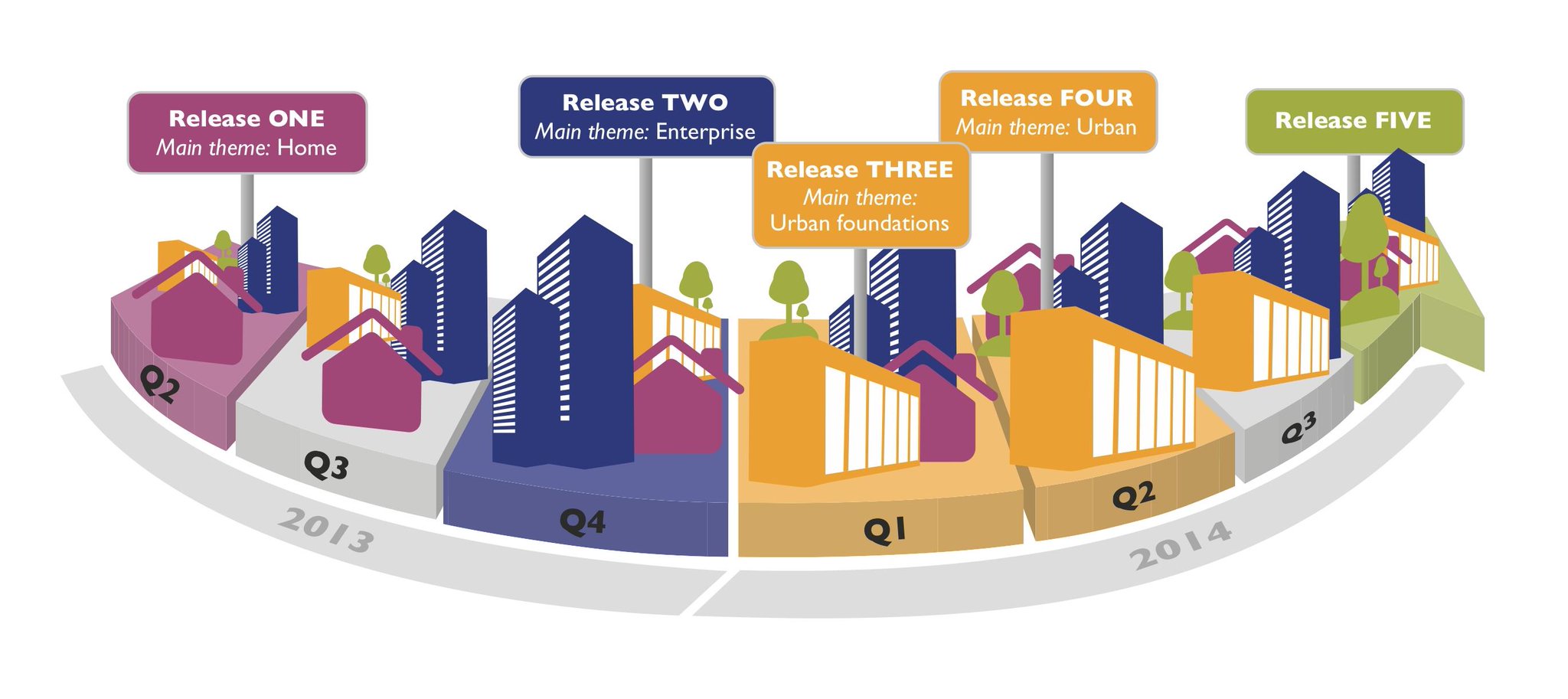
The Small Cells World Summit concluded last week. The main highlight was the Release 4 of Small Cell Forum on Urban, building on top of Release 3 - Urban foundations


Around 20 new documents have been published, available here on this release. Land Mobile has more details about this launch by Small Cell Forum here.

There were couple of interesting videos from the event by ThinkSmallCell and ConvergeDigest, they are embedded below:


Other related links (new links will be added as and when available):


Monday, 19 May 2014

Unlicensed LTE (LTE-U) for Small Cells

I first wrote about LTE-U (or U-LTE as referred by others) back in December last year pointing towards the Qualcomm presentation here. As things move fast in our industry, quite a few things have happened in the last 6 months. Huawei did a demo of U-LTE in Mobile World Congress this year and LTE-U has been a constant topic of discussion in various 3GPP meetings. A half-day workshop is due to take place in June to discuss this topic further. In the meantime I have summarised some of the discussions that took place (unofficially?) in Jan 2014 between the interested parties.
To be clear, the discussions for LTE-U are centred on the 5GHz unlicensed spectrum. As you can see from the picture above, there is a massive amount of spectrum that is available, either free to use (unlicensed) or in a lightly licensed way.
There are strict rules and regulations in place to make sure this license is not misused or monopolised. There will be a need for Dynamic Spectrum Access (DSA) techniques that I have discussed here. The current LTE standards do not have a DSA inbuilt and hence referred to as "Rude". The following is from a recent Light Reading article.

The technical concern with LTE-U, as Peters describes it, is that LTE is a "rude" technology. WiFi includes a "politeness protocol" that LTE lacks, meaning that WiFi will back off if it senses interference from other users. Eventually rude ol' LTE operating in WiFi's polite bands could take over the band.
The 3GPP called another unofficial meeting in January to discuss concerns around LTE-U, which also included the potential effect on the value of licensed spectrum, the need for international harmonization of the unlicensed bands used for LTE-U, and whether the technology would be for downlink only or uplink as well. The group met again in March, primarily to work out timing for the new technology's deployment.


Huawei presentation explains why unlicensed carrier offloading, see the embedded presentation for details.
NTT Docomo shows the various deployment scenarios and also lists the regulatory aspects, especially in Japan. See the complete presentation below:


Nokia has even gone ahead and done simulations for different scenarios. The scenario above shows LTE deployment in the same unlicensed band as WLAN as you can see, the results are similar to the interference in WLAN-WLAN case.

There is also a roadmap to how LTE-U standardisation will work in 3GPP, hopefully after the workshop in June, we will probably hear more.

As expected, some of the operators with heavy investments in WiFi (like AT&T) have some reservations on LTE-U. Some analysts on the other hand are sceptical on how much savings there would be, taking the interference into account. Note that spectrum is just one part of deployment costs, there are many other factors to consider. Personally, I don't have an issue whether this will work or not, it definitely would do but with all the advancements in LTE-Wi-Fi Interworking, I think we may be able to do a better job with just selective deployment of LTE-U and using technologies like MAPCON, IFOM, Hotspot 2.0, etc.

Added on 9th July 2014

3GPP held their workshop on unlicensed LTE on 13/06/2014. See the news on 3GPP website here. All documents are available here.

Sunday, 6 April 2014

Operator plans for the ultra-dense network


The following is from Rethink Wireless article last month:
Large-scale deployments of public access small cells are still in their infancy, but there is already talk of 'hyper-dense' networks to cope with hotspots of intense data usage. Most of this remains just talk, but Qualcomm - on the rampage in metrocells after a hesitant start- is showing off how the approach might work in reality. 
The chip giant, never averse to a bold demonstration, is claiming the densest network ever constructed in a working environment, equating to 1,000 cells per square kilometer (a neat figure given that Qualcomm's ongoing marketing campaign revolves around the '1,000x Data Challenge', predicting an increase of that magnitude over the coming decade). 
It has put the trial together for Sprint's TDD technology, working with Airspan, the WiMAX specialist that has evolved into a small cell vendor with heavy emphasis on self-organization and integrated backhaul.


We recently heard from Caroline Gabriel in our Cambridge Wireless Small Cells SIG this (last) week. This very interesting presentation below is from that event. A very important slide is the tools that are available for achieving this ultra-dense networks. Anyway, presentation as follows:


Monday, 2 December 2013

LTE-U: First step towards 'Operator-neutral' Small Cells

3GPP member companies have decided to take the Small Cells vs WiFi fight back into the Wi-Fi camp by unveiling the initiative to have LTE in the unlicensed band (officially known as LTE-U but another interesting term uLTEA has been proposed unofficially too). 

Mike Roberts wrote an interesting post on ITM Blog:
Qualcomm has launched a radical initiative to deploy LTE Advanced in the unlicensed 5GHz band, which has traditionally been the preserve of Wi-Fi devices. If the initiative gains support, it could be a hammer blow to carrier Wi-Fi, though Qualcomm says it is still a strong supporter of all types of Wi-Fi, given its Qualcomm Atheros division, which is a leading producer of Wi-Fi chipsets. 
Qualcomm CEO Paul Jacobs unveiled the company’s initiative for LTE Advanced in unlicensed spectrum at its financial-analyst day in New York on Nov. 20. It was interesting timing, considering that the main annual carrier Wi-Fi event, the Wireless Broadband Alliance’s Wi-Fi Global Congress, was taking place on the same day on the other side of the world, in Beijing. 
The chipset giant followed the announcement by its CEO with detailed presentations on the initiative at Informa’s LTE North America event in Dallas on Nov. 21-22. The essence of Qualcomm’s proposal is that it is complicated to integrate LTE and Wi-Fi to create carrier Wi-Fi, so a better option could be to use LTE Advanced to extend LTE into unlicensed spectrum, thus eliminating the need for Wi-Fi in that context....So how does Qualcomm plan to square this circle and offer reliable mobile services in unreliable unlicensed spectrum? By using LTE Advanced to create a hybrid system operating in both licensed and unlicensed spectrum at the same time. Specifically, Qualcomm is proposing a system that uses the carrier-aggregation (CA) feature of LTE Advanced to aggregate licensed LTE spectrum with unlicensed spectrum in the 5GHz band. The unlicensed spectrum, which would be aggregated with licensed spectrum on the downlink only, would only be used for data services. The licensed spectrum would be used for uplink and downlink and would support network control as well as voice and data services. Given the power limits placed on devices using the unlicensed 5GHz band, uLTEA would be used mainly in small cells, similar to Wi-Fi.

'All about 4G' did a good quick write-up on this topic from standards perspective, as follows:
Qualcomm has recently floated the idea of deploying LTE in unlicensed bands, particularly focusing on the 5GHz band, which is currently used mostly for WiFi. According to a document (RP-131635) submitted to the upcoming 3GPP plenary meeting, the proposal is to deploy LTE as Supplemental Downlink (SDL) in 5725-5850 MHz in USA, with the PCell (Primary Cell) always operating on a carrier in a licensed band. Verizon has also submitted a Work Item Proposal (RP-131680) to to introduce the new band for SDL usage. There’s also a Study Item proposal from Ericsson (RP-131788) is the rapporteur to study the modifications necessary to the LTE radio.

One of the big issue (though small cell vendors often play it down) that has been delaying the rollout of Small Cells has been interference management in co-channel deployment cases. The operators are worried about ad-hoc small cells creating interference with the properly planned and optimized Macro cells (though in practice its not as bad as they think it is). With LTE-U, this issue can be put to rest.

I can see LTE-U, if adopted, can also help create new business models around Small cells. Neutral Small cells, deployed in the hotspots like stadiums, shopping malls, etc. can serve users of all networks. The signalling can take care of each user connecting to its own network using backhaul.

Femto as a Service (FaaS) and Small Cells as a Service (SCaaS) would probably become a common approach as there would be no concerns about which spectrum is being used. 
There would be a small concern about interference between Wi-Fi and Small cells. Most of the existing Wi-Fi and other devices that use unlicensed spectrum use the 2.4GHz band with a few using 5GHz band now. If LTE-U uses the 'Listen Before Talk' approach, other technologies can be enhanced to probably do the same. Another thing worth remembering is that there is nearly 300MHz of spectrum in 5GHz band available universally. In certain countries the available spectrum can be as much as 500MHz. This should be enough for LTE-U as well as other technologies in the unlicensed spectrum.

The complete Qualcomm presentation is embedded below and is available to download from here:


Tuesday, 25 December 2012

'Metrocells'' or 'Neighborhood Small Cells'


Is 'Neighborhood Small Cells' just another name for 'Metrocells'?

Looks like the Metrocells would be used for the same purpose and does the same functionality.