Showing posts with label Analyst Maravedis-Rethink. Show all posts

Saturday, 6 February 2016

Small Cells Forecasts...


Small Cell Forum published a report last year titled 'Crossing the Chasm: Small Cells Industry 2015' in which draws on the findings of three very different pieces of research to show that, in 2015, for the first time outside the residential segment, small cells moved from trials and smaller deployments, to large-scale roll-outs, and this process of densification will accelerate from 2016 through to the end of the decade. The three studies each targeted a different base of respondents and so the plans and opinions of three key stakeholder groups – mobile operators, the component ecosystem, and enterprises – are all brought together to create a uniquely multidimensional view of the state of the market today. The report is available here to download.

ThinkSmallCell held their annual analyst forecast with Caroline Gabriel of Rethink Technology Research and Joe Madden of Mobile Experts. Their slide deck (with Video at the end) is embedded below. The webinar could also be viewed directly on Youtube here.


Feel free to add your opinion in the comments section on if you agree or disagree with these forecasts and statistics.

Thursday, 11 December 2014

Small Cells and WiFi Forecast 2013 - 2019

We had this last set of forecasts back in February, here is a new one up to 2019/20.


The slides and the video is embedded below but I want to mention few things here. The first being that in the last year (or since the beginning of this year) the main change that has occurred is the availability of Voice over WiFi (VoWiFi), either as native or as an app, has become a commonplace. What this means that some small cells deployments are no longer high priority and has been pushed back.

On the other hand some operators are conscious that small cells can provide a better QoS than WiFi hence they are going ahead with Small cells deployments.

Anyway, Slides and Video as follows:


Please feel free to leave your opinions in the comments below.

Sunday, 28 September 2014

HetNet Strategies with Oi Brazil


Brazil has been in limelight since the beginning of the year. Initially, the focus was on how the FIFA World Cup may fail but later on for the way everything came together at the last minute and everything worked. From a technology point of view, WiFi was a big saviour in the stadiums, allowing good connectivity for everyone wishing to add the things they liked on social networks as soon as they can.


An example was this chart tweeted by Ruckus Wireless to proudly show what their achievement was with stadium WiFi.


Recently, Maravedis-rethink conducted a webinar with the Brazilian operator Oi, regarding their HetNet strategies. The video for the relevant part is embedded in the end. Two slides caught my attention. The first was about the different technologies and their concerns (above). For example for a HetNet to be successful, all components should synchronised and have a strict time accuracy requirements. The Backhaul & Fronthaul requirements are equally interesting for different cases.


The second interesting slide is the final one where they have their wish list to what they would like to do in near-term and long-term. WiFi features in all the scenarios except for the rural case (as expected). Anyway, here is the video:


You can download the slides from Slideshare here.

Sunday, 15 June 2014

Small Cells World Summit (#SCWS14) Video and Summary Articles


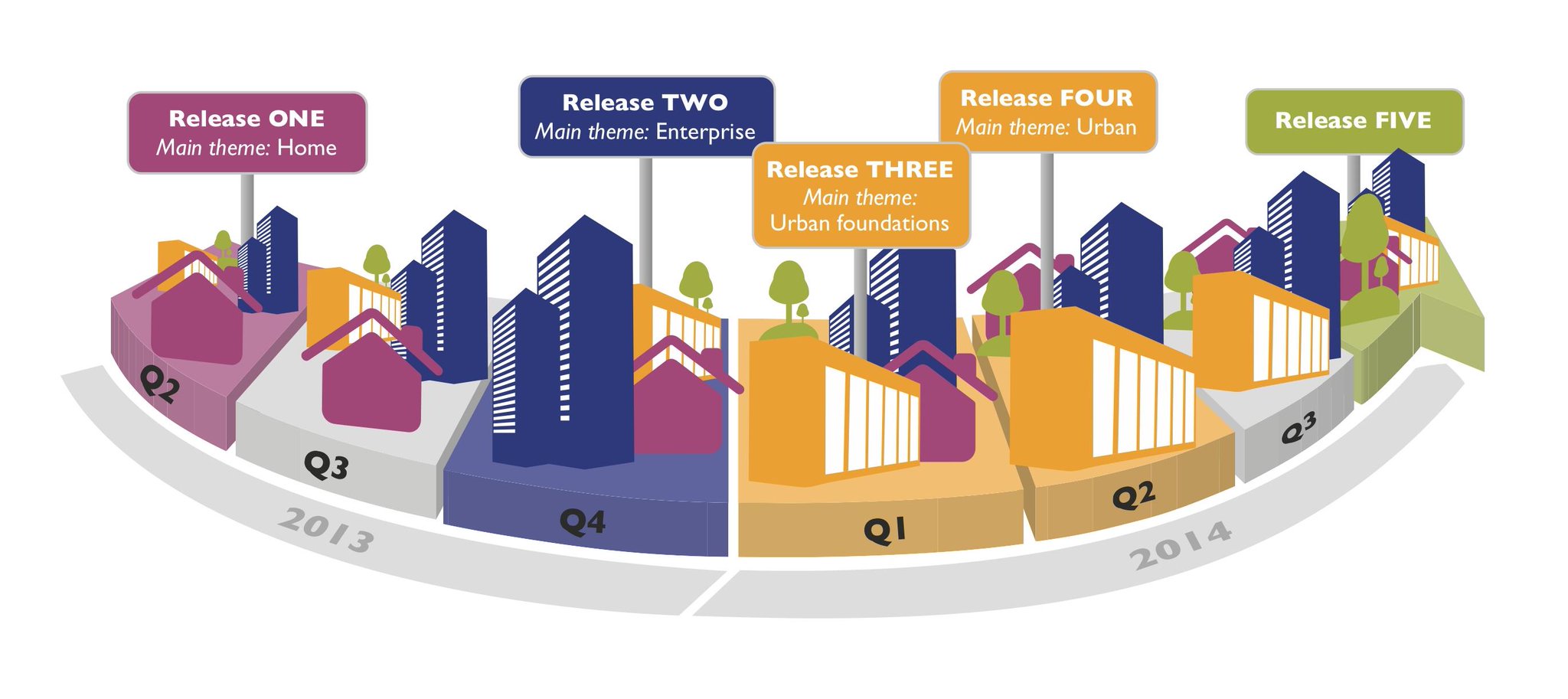
The Small Cells World Summit concluded last week. The main highlight was the Release 4 of Small Cell Forum on Urban, building on top of Release 3 - Urban foundations


Around 20 new documents have been published, available here on this release. Land Mobile has more details about this launch by Small Cell Forum here.

There were couple of interesting videos from the event by ThinkSmallCell and ConvergeDigest, they are embedded below:


Other related links (new links will be added as and when available):


Saturday, 31 May 2014

DAS or 'Small Cells' for Indoor Location


There was a recent webinar by Maravedis-Rethink & EJL. The slides are available on Slideshare here. I think there were some good points made about using DAS or Small Cells for the Indoor environment. Here is the youtube clip. You can drag the pointer to the beginning, to listen from the start.


Sunday, 6 April 2014

Operator plans for the ultra-dense network


The following is from Rethink Wireless article last month:
Large-scale deployments of public access small cells are still in their infancy, but there is already talk of 'hyper-dense' networks to cope with hotspots of intense data usage. Most of this remains just talk, but Qualcomm - on the rampage in metrocells after a hesitant start- is showing off how the approach might work in reality. 
The chip giant, never averse to a bold demonstration, is claiming the densest network ever constructed in a working environment, equating to 1,000 cells per square kilometer (a neat figure given that Qualcomm's ongoing marketing campaign revolves around the '1,000x Data Challenge', predicting an increase of that magnitude over the coming decade). 
It has put the trial together for Sprint's TDD technology, working with Airspan, the WiMAX specialist that has evolved into a small cell vendor with heavy emphasis on self-organization and integrated backhaul.


We recently heard from Caroline Gabriel in our Cambridge Wireless Small Cells SIG this (last) week. This very interesting presentation below is from that event. A very important slide is the tools that are available for achieving this ultra-dense networks. Anyway, presentation as follows:


Saturday, 22 March 2014

HetNet and LTE Trends and Challenges


Metrocells and C-RAN has been a frequent area of discussion on this blog. A good post about Metrocells is available here and about C-RAN is available here and here.

I found a small and useful presentation in my collection that highlights the trends, opportunities and challenges with the HetNets. The presentation is embedded below:


Sunday, 2 March 2014

Urban Small Cells

During the recently concluded Mobile World Congress (MWC), Small Cell Forum launched their 'Release 3' on Urban Small Cells. The following is an extract from their press release:

Release Three: Urban Foundations has been developed to help operators with the rollout of small cells in the important public access arena. It builds on two earlier releases that focused on the established market for residential small cells (Release One) and the growing market for enterprise small cells (Release Two).

Release Three addresses a step change in market evolution: the commercial deployment of small cells in the urban environment. It establishes the business case and market drivers for urban small cells. It also identifies and starts to address many of the technical, economic and operational challenges to successful deployment and the opportunities this market could offer.

As part of its Release Three output, the Forum commissioned an independent operator survey from consulting firm Maravedis-Rethink. The survey found that capacity, value-added services and the opportunity to integrate Wi-Fi were among the most commonly cited market drivers for urban small cells. Backhaul, optimal site acquisition, monetization and network management were identified as the primary concerns. 

Release Three addresses these varied issues realistically and coherently. Alongside the authoritative body of Small Cell Forum work it can already draw on, this Release includes 18 new and updated documents aimed at identifying demand and supporting operators in the deployment of urban small cells. These range from economic and commercial issues such as market drivers, business case and service opportunities to technical areas such as self-organizing networks, backhaul, Wi-Fi integration and network architecture as well as regulatory challenges and deployment processes.


To a lot of extent, this blog has focussed on Urban small cells mainly. Often, the Urban Small Cells are referred to as Metrocells. The term Meadowcells is now being used to differentiate the rural small cells. Urban Small cells come with their own set of problems, hence the release includes quite a few documents to help the operators look into their deployment. A list of documents from the Scf.Io is as follows:
SCF103Urban Small Cells: Release overview new
SCF096Deployment issues for urban small cells new
SCF095Backhaul for urban small cells: a topic brief new
SCF091Small cell application programmers’ guide new
SCF090Small cell services in the urban environment new
SCF089Next generation hotspot-based integrated small cell Wi-Fi new
SCF088Urban small cell network architectures new
SCF087Business case for urban small cells new
SCF086Market drivers for urban small cells new
SCF082LTE eNB L1 API definition new
SCF077Urban SON use cases new
SCF076Regulatory aspects of small cells new
SCF075Synchronisation for LTE small cells new
SCF050Market status statistics Q1 2014 - Mobile Experts new


A presentation made by the Small Cell Forum chairman, Gordon Mansfield is embedded below:


ThinkSmallCell has written an excellent report on MWC that is available here. A quick extract from that summary on the Urban Small cells as follows:

Tuesday saw the Small Cell Forum issue Release 3: Urban Foundation which contained a surprising number of documents (19). Gordon Mansfield, Chairman of SCF, told me it exceeded his expectations, especially since it followed so closely after December's Enterprise release. The same release co-ordination team have presided over another mammoth edition. The complete Urban document set will be published in June, now renumbered Release 4, and the roadmap for updates and further releases will be finalised in April. The Forum also has a new CEO, Sue Monihan, who brings expertise from running the GSMA North America organisation and I'm sure will continue to expand the remit, membership and influence of the organisation. She will continue to work part time for both organisations concurrently.

Many (but not all) organisations now seem to be focussing on LTE+Wi-Fi rather than 3G/LTE/W-Fi multi-mode for urban capacity solutions - something that Vodafone specifically stated during the conference.

Mike Schabel, VP Small Cells at Alcatel-Lucent, pointed out the radical shift from voice to data is still fairly recent and has had huge impact for operators. Their commercial activity in Small Cell trials and business opportunities has never been busier. Speaking at the conference, he said "I can't keep up" with the number of RFPs today. They are working with 65 operators around the world (without double counting). This is happening in all regions - it's all over the world. While the technologies are the same across the small cell sector, what varies are the different business drivers found across their different customers.

Randy Cox, Head of Small Cells at NSN, showed me their latest LTE+Wi-Fi Urban Small Cell. This is quite a compact unit (about the size of a large dinner plate), capable of up to 400 concurrent sessions/calls. It's very much a downsized macrocell, reusing the same TI silicon chipset and optionally connected through a Flexi-Zone controller. They aren't planning a 3G/LTE multi-mode product at the moment, believing that LTE is the future. "We are in this for the long term" he told me. They continue to support their existing femtocell customers (using NSN's femtocell gateway and Cisco/Ubiquisys small cells), but it seemed to me that their Small Cell focus had shifted firmly to LTE.

NEC bring their own LTE expertise from Japan, with a range of in-house products complemented by partner solutions, both for Small Cells and wireless backhaul. They'veselected Radisys as their LTE Small Cell software supplier for their next in-house products. They position themselves as a one-stop shop for the new last mile, offering to handle everything from the initial planning through operational management of a portfolio of equipment. They told me that where macrocell deployments might have had four or five standard templates or scenarios, they've seen more like 400 to 500 different use cases. I do hope that's an exaggeration!

I saw several supporting technologies to de-risk HetNet deployments, ranging from smarter RF planning tools with more Small Cell features, SON vendors making further inroads, test validation and performance loading. There is a wider ecosystem here, finding newer and smarter ways to plan, manage and validate the network which wouldn't be cost effective at scale using traditional methods. Highlights included ERCOM's integration with Infovista/Mentum, allowing emulation of huge numbers of users in real-world scenarios, characterising the behaviour of small and macrocells that can be fed back into the planning tool. IXIA also have a comprehensive test and validation suite, de-risking the rollout of new features or vendor equipment by pushing the envelope and exploring the limits - not just conformance testing against standards. Sources of usage data now include directly from the handset, not just the network. OpenSignal published their "Global State of LTE Report" with actual performance results from 6 million users worldwide. Apparently Sweden has the fastest LTE in the world. The average speed worldwide is now just over 10Mbps. This whole area of back office planning and network management is evolving rapidly with many new technologies, tools and approaches coming on stream. Don't be distracted by the concepts of SDN and NFV - there are many more relevant and beneficial changes to how networks are managed coming along.

Wednesday, 5 February 2014

Small Cells and WiFi Forecast 2012 - 2018

I have been following and having some interesting discussions on a Linkedin group where the main argument is that Small Cells may never really take off as its not a good solution and doesn't make a good business case. I think that kind of discussion is best left to do on Linkedin.

ThinkSmallCell held a webinar recently inviting couple of leading experts to discuss their forecasts for Small cells. The webinar slides and videos are embedded below. Here is a quick comparison of what these independent leading experts had to show:

The main point to note above is that we will hopefully hit 1 million public access small cells probably around/after 2015. My view on why operators have been slow in deploying small cells have been mainly to do with interference management. As we know, Small cells are deployed for Coverage and Capacity and is mainly deployed in Co-channel (same carrier as Macro). If there is no or little coverage, Small cells deployment is not an issue. With higher frequencies, the reception in the houses goes down so deploying Femtocells make sense. With public access small cells, interference (especially on 3G) has to be managed. Surprisingly the practical results for co-channel public access outdoor small cells deployed for capacity purpose is not too bad but there is a no coverage area created as a result of interference at the edge of the small cell. This can cause handover issues.

In LTE-A, Interference techniques like (f)eICIC will help handle these situations so I wont be surprised if there are lots of deployments next year with this interference management capability.

The main thing to note is that WiFi will play a huge part for the connected devices of the future. Most of the small cells deployed with also have a WiFi capability so operators can use that to offload traffic from the cellular on Wi-Fi.

My understanding is that in future we will see Macro cells mainly serve high-mobility connections (including connected cars) and Small cells and WiFi will be used for low mobility and fixed access. I guess the real advantage of cellular over Wi-Fi in this low mobility scenario is that since Wi-Fi is unlicensed, there could be interference from many unpredictable sources. Licensed cellular bands dont generally have this issue.

Anyway, the presentation and video from webinar is embedded below:


Monday, 25 November 2013

Wi-Fi as the preferred cellular access and barriers to roaming

Republic Wireless, a regional carrier in the USA is doing some interesting stuff with Wi-Fi and is possibly going to create some interesting challenges for established cellular carriers. An extract from a recent article in Washington post as follows:

Consider Republic Wireless, a Raleigh-based business that announced this month it would sell Motorola's new flagship phone, the Moto X. Republic enjoys all the traditional advantages of an MVNO — low capital expenditures on infrastructure and spectrum — but it's taken the additional step of cutting out 3G and 4G data use whenever it can. Technically, Republic operates on Sprint's network, but it's more appropriate to think of Sprint as a backup for when a call or message can't be completed over WiFi.
Yes, you read that right: WiFi. Republic's business depends on shunting all of your communications — data, voice, everything — onto the free stuff you get in your office or in coffee shops. What makes this beautiful is that whenever a Republic customer chooses to place a call over WiFi, that saves Republic money. As a result, Republic can offer a $5-a-month plan for unlimited talk, text and data. For another $5 a month, customers get access to Sprint's cellular network (minus 3G). Higher-tier plans provide 3G and 4G Internet on Sprint, though it's almost a joke to call them "higher-tier" when the most expensive plan tops out at just $40 a month. The tiered plan supersedes an old, $19-a-month all-you-can-eat plan.
"The crazy plans at $5 and $10 have never been tried," said CEO David Morken. "That's because we focus on unlicensed spectrum as the primary, and licensed spectrum as the secondary."
This approach can be quite disruptive for the MNO's. With NGH / HS2, soon MVNO's like republic wireless will be able to offer roaming on WiFi, thereby cutting the costs while not in the home market.

WBA released an Industry report recently (embedded below) which had some interesting findings.

Industry bodies, vendors and device manufacturers are working hard to get rid of some of these limitations and barriers. Once these limitations are gone, there is going to be a good business case for offering of global Wi-Fi roaming for example.


Another interesting question in the survey was what would be your preferred means of building Wi-Fi footprint. One of the answers is shown above, a similar question was asked in a webinar and posted in the 3G4G blog post here.


Finally, since the WBA report mentions about Wi-Fi and Small cells data offload, you may find a previous post of interest here.

The complete WBA report as follows:


Saturday, 9 November 2013

What are Homespots?

Recently I got introduced to the term 'Homespots'. While I knew what they are, I wasn't aware there was a term for them

The slide above and below are from a recent webinar by Maravedis-Rethink (embedded at the end of the post)


In UK we have BT FON and Openzone which are both Wi-Fi hotspot services. Openzone is actually a hotspot deployed and maintained by them while FON is actually a Homespot, which uses spare capacity from the open Home Hubs deployed in the homes. BT has some details about it here.


Anyfi whitepaper shows (see above pic) some of the technical challenges that need to be kept in mind while deploying Homespots.

Anyway, here is complete presentation from the webinar mentioned above


Sunday, 20 October 2013

New opportunities in Carrier Wi-Fi & Wi-Fi offload


Interesting webinar from Maravedis-Rethink exploring the new opportunities with Carrier-WiFi and Offloading. Embedded below is the video and presentation:


Monday, 14 October 2013

The right technology for different Enterprises

The enterprise deployments seem to be hotting up. Back in May, Telefonica O2, Germany, announced 'Signal Box', their enterprise femtocell based on UMTS to improve indoor coverage. Recently Vodafone in Netherlands announced that they are offering enterprise small cells from Spidercloud. There was an interesting article in Fierce Wireless about the enterprise small cells opportunity. The relevant part is reproduced below:

Saturday, 30 March 2013

Wireless Backhaul and Vendor Landscape

As mentioned earlier, backhaul is one of the biggest challenges for Small Cells Deployment. A recent article in Maravedis Rethink stated the following:

While some people forecast that as many as 80 or 90% of outdoor metrocells will be connected by wireless backhaul, Maravedis-Rethink believes we'll see something closer to today's split in macrocells - about 55% wireless and 45% fiber. Operators will use fiber wherever possible and install short range wireless in the gaps.
In some countries, the availability of fiber is far higher than in others, for example in South Korea, China and Japan. Even in the US, where there is plenty of copper, my guess is that operators will try to reuse existing copper lines to reach the nearest fibre point of presence. As an analyst, it would be quite easy to be aggressive with high wireless backhaul forecasts, but we have to consider that in reality most operators are very conservative about adopting new technology.
So wireless backhaul may be more important for metrocells than for macrocells, but not excessively so.The most important issue for a metrocell is to offload traffic from the macro network. Location is fundamental – the NGMN (Next Generation Mobile Network) Alliance has indicated that cells need to be located within 10 meters of each traffic hotspot – so there really needs to be far more flexibility in backhaul. This is where wireless backhaul becomes more significant.
The role that third party players offering ‘small cells as a service’ such as Virgin and Colt can play is also important. The value of street furniture will increase in the coming years. Those who deployed city Wi-Fi in the past (and failed through lack of monetization) have now realised they were getting access to valuable infrastructure. If you get permission for public Wi-Fi and small cell deployment then that could make the service provider Wi-Fi business more interesting. This gives intermediate players like Virgin, who can deal directly with building, real estate and council owners, an important role to isolate network operators from many/multiple negotiations with location owners. This would make it much more convenient for operators to contract through intermediate players than directly themselves.